Atherosclerosis is one of the most common vascular diseases worldwide and can be extremely dangerous if detected too late. The condition often develops silently over many years before any symptoms appear. Our infographic illustrates how arteries change over time, which symptoms to look out for and which risk factors are involved.
What is Atherosclerosis?
It occurs when fats, cholesterol and other substances build up inside the arterial wall. These deposits, known as plaques, narrow the vessel and restrict blood flow. This results in tissues receiving too little oxygen, which can lead to pain, circulatory problems, and severe complications such as heart attacks, strokes, and peripheral arterial disease (PAD).
Infographic: Healthy Artery vs. Atherosclerosis
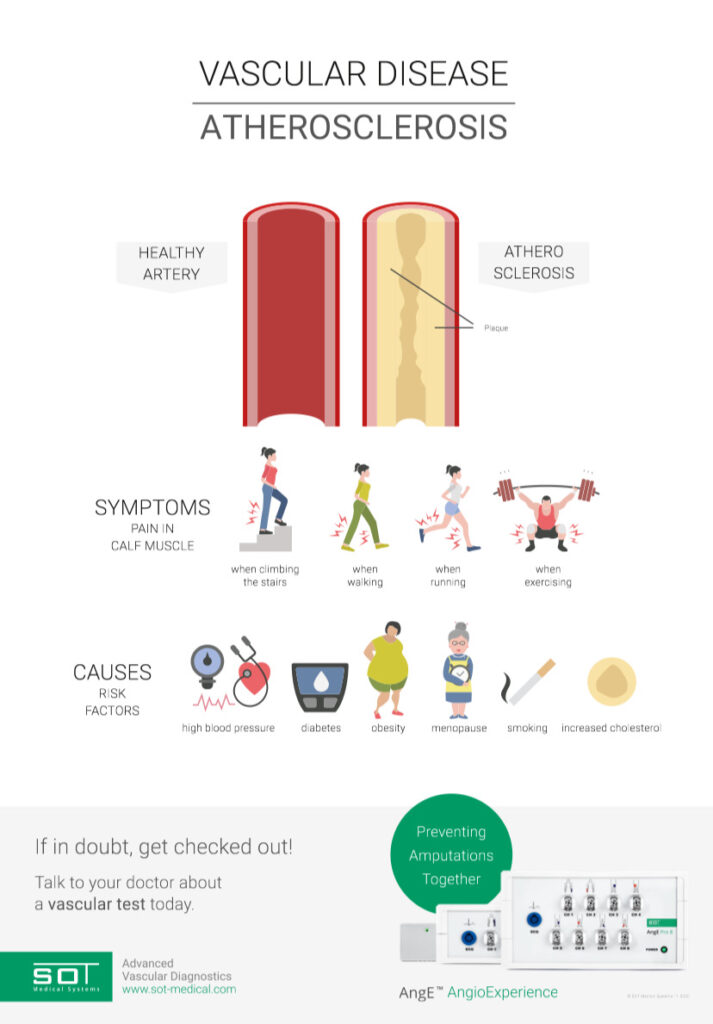
👉 Download Infographic here: https://www.sot-medical.com/download/sot-poster-atherosclerosis/
The infographic highlights the difference between a healthy artery and one narrowed by plaque. A healthy vessel allows blood to flow freely, while an atherosclerotic artery is constricted, similar to a pipe that slowly becomes clogged.
Typical Symptoms: Recognize the Early Warning Signs
-
Calf pain when walking: This is the classic sign of intermittent claudication. Pain typically goes away with rest and returns during activity.
-
Pain when climbing stairs: Muscles require more oxygen, which diseased arteries cannot provide.
-
Discomfort during running or exercise: Physical activity often reveals symptoms earlier.
-
General pain during exertion: Even everyday activities can trigger discomfort when blood flow is restricted.
Causes and Risk Factors
The infographic highlights several key drivers of atherosclerosis:
-
High blood pressure: Causes micro-injuries to the vessel wall, making plaque buildup easier.
-
Diabetes: Significantly increases the risk by damaging blood vessels.
-
Obesity: Contributes to metabolic changes that accelerate vascular disease.
-
Menopause: Hormonal changes can reduce natural vascular protection.
-
Smoking: Narrows blood vessels and accelerates plaque formation.
-
High cholesterol: Leads to buildup inside the arterial wall.
Most patients have more than one risk factor, making regular screening essential.
Why Early Detection is Crucial
Atherosclerosis often progresses silently. By the time symptoms appear, the disease is usually already in an advanced stage. Early diagnosis can prevent complications and make treatment far more effective.
Modern vascular diagnostics, such as ABI, TBI and PWI measurements, help clinicians to detect circulation problems before symptoms arise. Screening is particularly important for patients with diabetes or hypertension, smokers, and people over 60.
Modern Diagnostic Solutions
Modular vascular testing systems used in clinics and outpatient practices provide fast, standardized and patient-friendly assessments. They offer objective values that help physicians identify risks early and tailor treatment strategies effectively.
👉 Discover more here.