Understanding Venous Thrombosis: Causes, Symptoms, and Why Early Detection Matters
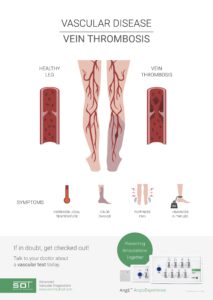
Venous thrombosis is a serious vascular condition that occurs when a blood clot forms inside a vein, disrupting normal blood flow. The infographic below provides a clear visual comparison between a healthy leg vein and a vein affected by thrombosis, helping to explain how restricted circulation and clot formation can lead to noticeable symptoms and potential complications.
What Is Venous Thrombosis?
Venous thrombosis develops when a blood clot (thrombus) forms within a vein, partially or completely blocking blood flow. It most commonly affects the deep veins of the legs, a condition known as deep vein thrombosis (DVT). Without timely diagnosis and treatment, venous thrombosis can progress and lead to serious outcomes, including pulmonary embolism.
Infographic: Healthy Leg vs. Vein Thrombosis
👉 Download the Infographic: https://www.sot-medical.com/download/sot-poster-vein-thrombosis/
Healthy Vein
In a healthy leg vein, blood flows smoothly back toward the heart. The vein remains open, circulation is unobstructed, and surrounding tissue receives sufficient oxygen and nutrients. Proper blood flow is essential for maintaining overall vascular health.
Vein Affected by Thrombosis
In venous thrombosis, a blood clot narrows or blocks the vein. As shown in the infographic, this leads to:
-
Restricted or disrupted blood flow
-
Blood pooling below the blockage
-
Increased pressure within the vein
-
Inflammation of surrounding tissue
If part of the clot breaks loose, it can travel through the bloodstream and potentially lodge in the lungs, causing a pulmonary embolism.
Common Symptoms of Venous Thrombosis
Venous thrombosis can present with a range of symptoms, many of which are clearly illustrated in the infographic. These may include:
-
Increased local temperature
-
Skin color changes, such as redness or discoloration
-
Pain or tenderness, often worsening when standing or walking
-
A feeling of heaviness or tightness in the leg
In some cases, symptoms may be mild or develop gradually, making early recognition especially important.
What Causes Venous Thrombosis?
Several factors can increase the risk of developing venous thrombosis, including:
-
Prolonged immobility (e.g., long travel, bed rest, recovery after surgery)
-
Injury or surgery affecting blood vessels
-
Hormonal influences, such as pregnancy or hormonal therapies
-
Certain medical conditions, including cancer or clotting disorders
-
Increasing age and genetic predisposition
Often, multiple risk factors occur together, significantly raising the likelihood of clot formation.
Diagnosis and Treatment
Early and accurate diagnosis is crucial to prevent complications. Modern diagnostic approaches allow healthcare professionals to assess venous blood flow, identify blockages, and evaluate clot size and location.
Treatment depends on the individual situation but may include:
-
Anticoagulant (blood-thinning) medication
-
Compression therapy to support circulation
-
Encouraging early and safe movement
-
Interventional or surgical procedures in selected cases
The goal of treatment is to prevent clot growth, reduce symptoms, and lower the risk of further complications.
Conclusion
The infographic highlights how venous thrombosis develops and why it should never be underestimated. A blood clot can significantly impair circulation and, if left untreated, lead to life-threatening conditions. Understanding the differences between a healthy vein and a thrombosed vein helps raise awareness of warning signs and supports early medical intervention.
If venous thrombosis is suspected, prompt evaluation by a medical professional is essential to protect vascular health and reduce long-term risks.