Understanding Varicose Veins – Causes, Symptoms, and How They Affect Your Health
Varicose veins are one of the most common vascular conditions, affecting millions of adults worldwide. The infographic above provides a clear visual comparison between healthy veins and those affected by varicosities. It helps us understand what happens inside the body when these swollen, twisted veins begin to appear.
Superficial vs. Deep Venous Insufficiency
Distinguishing between superficial and deep venous insufficiency is critical for determining the appropriate therapy. Superficial insufficiencies, such as varicose veins, can often be treated with minimally invasive methods. In contrast, deep insufficiencies affect the major veins of the leg and can lead to severe complications such as venous ulcers. Our Venous Function Test provides the data needed to accurately diagnose these conditions and develop tailored treatment plans.
What Are Varicose Veins?
Varicose veins are swollen, enlarged veins – usually in the legs – caused by weakened or damaged vein valves. When these valves fail, blood flows backward and pools, leading to visible bulging veins and uncomfortable symptoms. Varicose veins are a common type of venous disease and can worsen without proper treatment.
Infographic: Healthy Veins vs. Varicose Veins
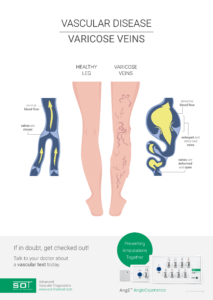
👉 Download here: https://www.sot-medical.com/download/sot-poster-varicose-veins/
Healthy Leg Veins
Healthy veins allow blood to move smoothly toward the heart. Strong vein walls and properly functioning valves prevent backward flow, supporting healthy leg circulation.
Varicose Veins
In varicose veins, valves do not close properly. Blood begins to pool, causing:
-
Vein enlargement
-
Twisted, bulging appearance
-
Abnormal blood flow
- Pressure and discomfort
This condition is known as venous reflux and is the main cause of varicose veins.
Symptoms You Might Notice
Varicose veins don’t just affect appearance—they can cause uncomfortable symptoms, including:
-
Aching or heavy legs
-
Swelling around the ankles
-
Burning or throbbing sensations
-
Muscle cramps, especially at night
-
Itching around the veins
-
Skin discoloration in severe cases
While often considered a cosmetic concern, varicose veins can progress to more serious issues if left untreated, such as chronic venous insufficiency.
What Causes Varicose Veins?
Several factors can weaken vein walls or valves:
1. Genetics
A family history of varicose veins significantly increases your risk.
2. Age
Veins naturally lose elasticity as you get older.
3. Hormonal Changes
Pregnancy, menopause, or hormonal treatments can affect venous health.
4. Long Periods of Sitting or Standing
Jobs that require prolonged standing or sitting can restrict circulation.
5. Weight
Extra body weight increases pressure on the veins.
Can Varicose Veins Be Treated?
Yes—modern varicose vein treatments are effective, minimally invasive, and often require little downtime. A key factor in successful treatment is a clear understanding of the venous system and blood flow.
Advanced diagnostic technologies, such as those developed by SOT Medical Systems, support healthcare professionals by providing detailed insights into vein function and circulation. This information helps guide treatment decisions and ensures that therapy is tailored to the individual patient.
Conclusion
The infographic highlights a simple but important truth: healthy veins depend on strong, functioning valves. Once those valves begin to fail, varicose veins can develop, causing discomfort and noticeable changes in the legs. As a result, understanding what happens beneath the surface is essential for managing symptoms and identifying effective treatment options.
In addition, if you’re concerned about varicose veins—whether for comfort, health, or appearance – a vascular specialist can guide you through appropriate solutions and help protect your long-term vein health.